
Airbnb in Dubai: holiday-home rules, permits and returns for owners
Airbnb in Dubai is legal with a holiday home permit from the Department of Economy and Tourism. The rules, fees, Tourism Dirham, management and 2026 returns.
9 min read · Updated 13 October 2026 · Independent guide, checked against official sources
Renting your Dubai flat on Airbnb is legal, but only once the home is registered as a holiday home with Dubai's Department of Economy and Tourism (DET). You need a permit for each unit, the whole home must be let rather than single rooms, guests must be covered by insurance, and a nightly Tourism Dirham fee applies to every stay. Letting without a permit can bring fines of up to AED 20,000 for a first offence.
The returns can beat a long let in a strong tourist year, but costs are higher and income is far less predictable. 2026 made that plain: short-term bookings across the UAE dropped sharply in the spring and were still below 2025 levels in the third quarter. This guide covers the rules, the fees, how management works and what owners can realistically expect, as of October 2026.
The legal basis for holiday homes in Dubai
Holiday homes are governed by Decree No. 41 of 2013, which regulates the business of letting holiday homes in Dubai. The decree names the tourism authority, then called the Department of Tourism and Commerce Marketing and now part of DET, as the regulator. Its main points for owners:
- A licence or permit is required before you let a home to short-stay guests.
- The whole home must be let. Renting individual rooms or bed spaces is not allowed.
- Guests must be insured. You need a policy from a licensed insurer covering guests against damage, valid for the full permit period.
- Homes are classified as deluxe or standard, and the regulator can inspect and reclassify them.
- Bookings must not go through unlicensed parties. If you use a manager, they must be licensed.
- Penalties range from AED 200 to AED 20,000, doubling for a repeat offence within a year up to AED 100,000. The regulator can also suspend activity for up to six months or cancel a licence.
Getting a holiday home permit in Dubai
DET runs the process through its online Holiday Homes system. Based on DET's published guidance, as reported by Gulf News in October 2025, the steps are:
- Create an account on the Holiday Homes portal. As an individual owner, the name on the account should match the name on the title deed.
- Add the unit, with its type, number of bedrooms, size and developer.
- Upload documents: the title deed or a Dubai Land Department approved sale and purchase agreement, a developer NOC if one applies, your passport or Emirates ID, a recent DEWA bill and a property management letter (a template is on the portal).
- Submit for review. Applications are usually reviewed within one business day.
- Once approved, complete the self-classification and pay the fees online.
Expect an inspection. The unit must be empty while it takes place, and any faults found must be fixed within two weeks. DET may also inspect without notice. Permits run for between three and twelve months.
Who can and cannot register
- Apartments need "Residential" on the title deed.
- Hotel rooms and hotel apartments cannot be registered as holiday homes. Our guide to hotel apartments in Dubai explains that route.
- Homes whose sale contract prohibits short-term letting cannot be registered. Read your SPA before you buy if Airbnb income is part of the plan.
- Tenants can only sublet with the landlord's written NOC and a lease that allows it.
- Individual owners can register a limited number of units themselves, reported as up to eight. Larger portfolios generally go through a licensed holiday home operator.
Owners' associations in some buildings also restrict short stays. Ask the building manager before you commit.
Holiday home permit fees and the Tourism Dirham
Published figures differ between sources, so check the current schedule on the DET portal before you pay. As of October 2026, these are the figures most often cited:
| Charge | Amount | Euros | Source |
|---|---|---|---|
| Permit fee per bedroom | AED 300 | about €74 | DET guidance via Gulf News |
| Classification certificate | AED 50 | about €12 | DET guidance via Gulf News |
| Knowledge and innovation fees | AED 10 each | about €2.50 each | DET guidance via Gulf News |
| Minimum total per home | AED 370 | about €91 | DET guidance via Gulf News |
| Annual maximum per home | AED 1,200 | about €296 | DET guidance via Gulf News |
| Registration charge cited in other coverage | AED 1,520 | about €375 | Khaleej Times |
| Tourism Dirham, deluxe home | AED 15 per room per night | about €3.70 | Khaleej Times |
| Tourism Dirham, standard home | AED 10 per room per night | about €2.50 | Khaleej Times |
The permit fee is the same whatever the permit length, so most owners take twelve months. The Tourism Dirham is due for every night a room is occupied and is normally built into the price the guest pays.
The permit and Tourism Dirham are small compared with the real costs of running a holiday home, which are covered below.
What it costs to run an Airbnb in Dubai
A holiday home behaves more like a small hotel than a rental flat. Compared with a long let, you take on:
- Furnishing and equipment to DET's standards, refreshed as it wears.
- Utilities and internet, which a long-let tenant would normally pay.
- Cleaning and linen after every stay.
- Platform fees on each booking.
- Management commission if you use an operator, usually a percentage of booking revenue.
- Insurance that covers guests, as the decree requires.
- Service charges, which you pay either way.
- Empty nights, which are far more common than empty months on a long let.
On tax, the UAE does not tax individuals on rental income from property they own personally. VAT is a separate question: the Ministry of Finance sets a mandatory VAT registration threshold of AED 375,000 of taxable supplies a year (about €92,600), and short stays are treated differently from long residential leases. If your bookings could approach that level, or you hold units through a company, take advice. Income is also usually taxable where you live; see our guide to tax on Dubai property for UK and EU residents.
Airbnb management in Dubai
Most overseas owners use a licensed holiday home operator. A full-service operator lists the home, sets prices, handles guests and check-ins, arranges cleaning and maintenance, and collects the Tourism Dirham. In return it takes a commission on revenue, and some also charge for setup, linen or furnishing.
When you compare operators, ask:
- Is the company licensed by DET as a holiday home operator?
- What percentage do you take, and of what: gross booking value or revenue after platform fees?
- Which costs come out of my share: cleaning, consumables, repairs?
- What occupancy and average nightly rate did comparable units in my building achieve over the past twelve months, month by month?
- How quickly do I receive payment, and in what currency?
Insist on actual statements for similar units, not projections. The gap between a brochure and a real twelve-month statement is often large.
Returns: what 2026 tells you
Dubai's tourism base is strong. DET reported a record 19.59 million international overnight visitors in 2025, with Western Europe the largest source region. That is the long-term case for holiday homes.
But short-term income is exposed to shocks in a way a twelve-month tenancy is not. When demand dropped in the spring of 2026, bookings fell sharply within weeks. By the third quarter, AirDNA data reported by Skift showed UAE booked nights still about 13% below a year earlier. Occupancy was actually slightly up, but mainly because about 5% of listings had left the market in July after months of weak returns. Stays have also become longer, as more guests booked for a month or more.
The lesson is not that holiday homes do not work in Dubai. It is that you should only run one if you can live with a bad quarter, and that a home which also works as a long let gives you a fallback.
Compare the two before you decide. Our guide to Dubai rental yields shows how a typical long-let return falls from gross to net, and the calculator below lets you model a holiday home against a long let with your own figures.
Calculator
Rental yield calculator
Headline yields are gross. This takes off service charges, management, maintenance and empty weeks, so you see what you would actually keep.
Gross yield
6.5%
AED 96,923 a year
Net yield
4.4%
after costs, before any tax at home
You keep
€16,439
AED 66,577 a year
Service charges are set per building by the Dubai Land Department index (roughly AED 12 to 25 per sq ft a year for most apartments). Holiday homes need a Department of Economy and Tourism permit and pay a Tourism Dirham fee per night. No UAE income tax on rent; you may owe tax at home.
Which homes suit holiday letting
The homes that let best to short-stay guests tend to share a few features: a recognisable address, a view, easy access to the beach or the city centre, and amenities guests can see in photos. Branded towers often perform well on nightly rate, though they also carry higher prices and service charges. Our guide to branded residences in Dubai looks at whether the premium pays.
Three current launches, all off-plan, show the kind of stock owners consider for holiday letting. None of them can be registered as a holiday home until it is complete and handed over, so the income starts at handover, not at purchase.
- DAMAC Bay by Cavalli is a 42-storey tower at Dubai Harbour with Cavalli interiors, a private beach and a rooftop infinity pool. Prices start from AED 3,939,000 (about €973,000) for one to three-bedroom apartments, with duplexes too, and handover is due in Q3 2027.
- Canal Crown de GRISOGONO in Business Bay has Dubai Canal views and units from studios to four bedrooms, from AED 3,850,000 (about €951,000), with handover in Q4 2027.
- Lagoon Views in DAMAC Lagoons offers one and two-bedroom apartments with lagoon-facing balconies from AED 1,625,000 (about €401,000), on a 1% monthly plan, with handover in Q2 2027. A master community like this often attracts families and longer stays rather than weekend visitors.
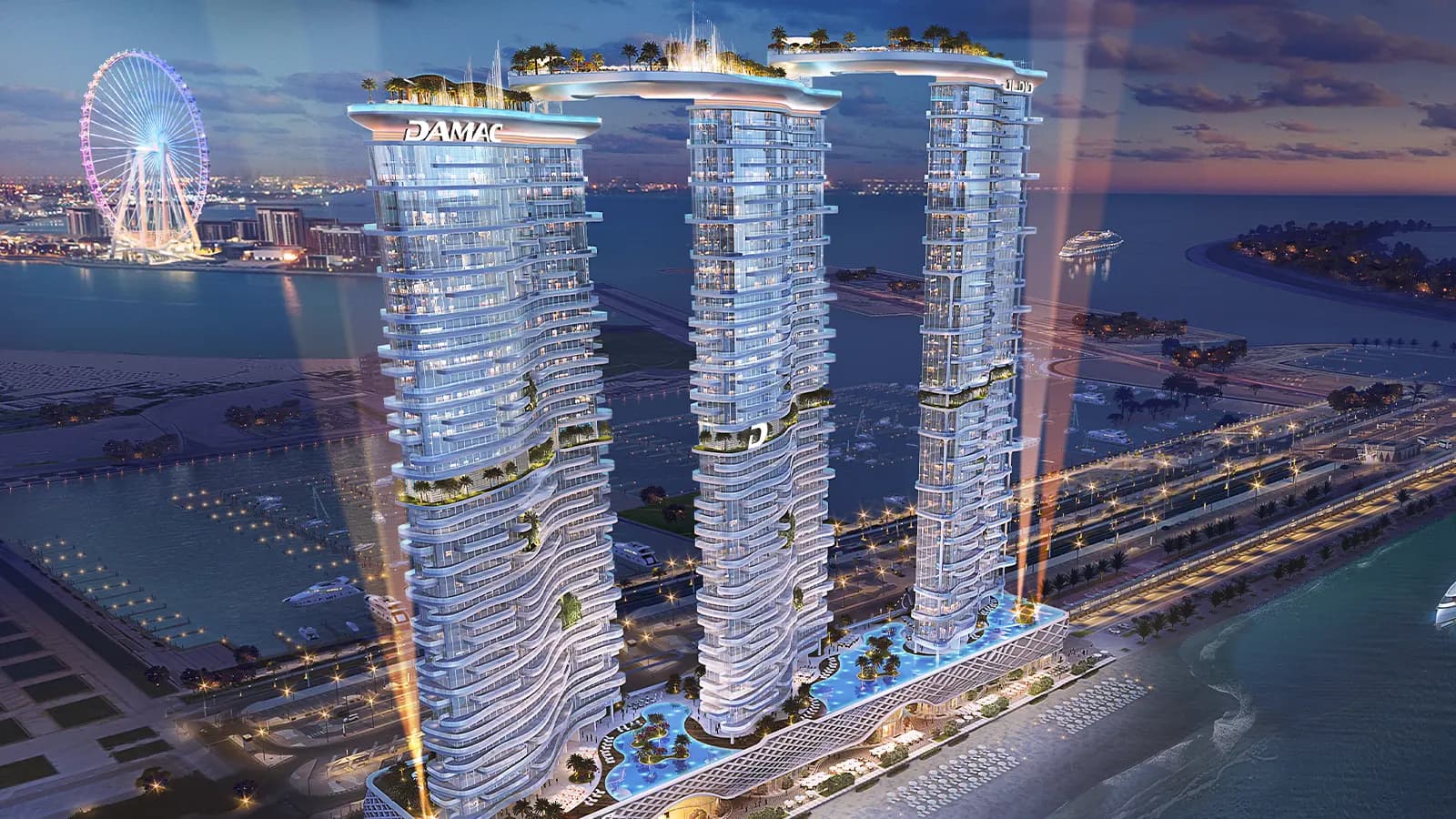
Dubai Harbour
DAMAC Bay by Cavalli
From AED 3,939,000 ≈ €973k
Q3 2027
1–3 BR, 3–5 BR duplexes · 60/40

Business Bay
Canal Crown de GRISOGONO
From AED 3,850,000 ≈ €951k
Q4 2027
Studio – 4 BR · 60/40
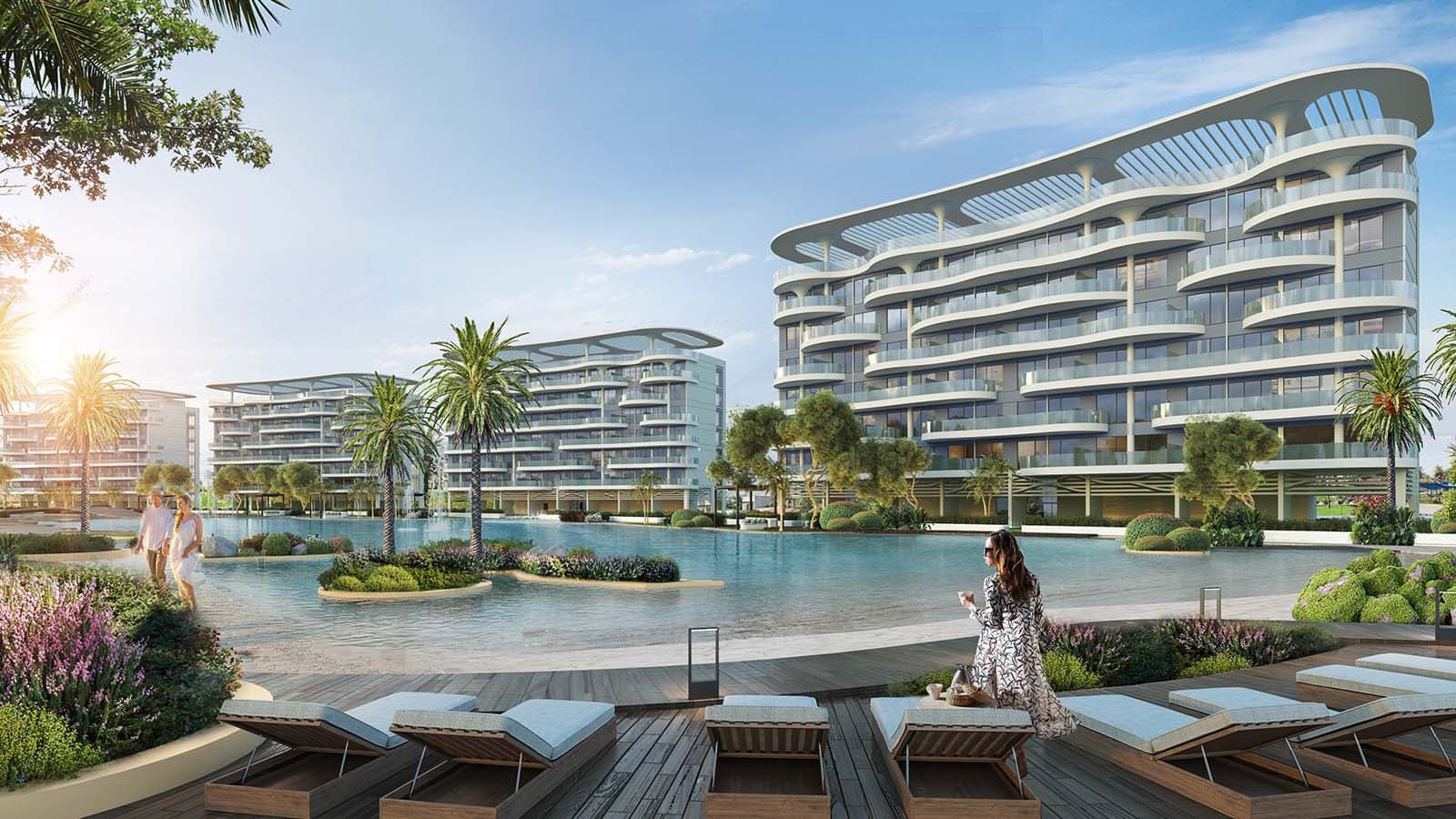
DAMAC Lagoons
Lagoon Views
From AED 1,625,000 ≈ €401k
Q2 2027
1–2 BR · 1% monthly plan
Before you book any unit for holiday letting, ask the developer whether the sale contract allows short-term rental. Our guide to buying off-plan in Dubai explains what to check in the SPA.
A short checklist for owners
- Confirm the SPA and building rules allow holiday letting.
- Check the title deed will show "Residential" use.
- Get quotes and real twelve-month statements from at least two licensed operators.
- Arrange guest insurance from a Dubai-licensed insurer.
- Register the unit, pass the inspection and pay the permit fee.
- Model the net return against a long let, and keep the long let as your fallback.
When you are ready to look at specific units, you can ask for a shortlist from a RERA-licensed partner broker.
Frequently asked questions
Is Airbnb legal in Dubai?+
Yes, if the home is registered as a holiday home with Dubai's Department of Economy and Tourism and has a valid permit. Hosts must let the whole home, insure guests and account for the Tourism Dirham on each night. Letting without a permit can lead to fines.
How much does a holiday home permit cost in Dubai?+
DET guidance reported by Gulf News lists AED 300 per bedroom plus small classification and admin fees, with a minimum of AED 370 and a maximum of AED 1,200 per home a year. Other coverage cites a registration charge of AED 1,520. Check the current schedule on the DET portal before you pay.
What is the Tourism Dirham for holiday homes?+
It is a nightly fee per occupied room, reported at AED 15 for deluxe holiday homes and AED 10 for standard ones. It is normally included in the price the guest pays and passed on to DET.
Can I rent out an off-plan property on Airbnb?+
Not until it is complete and handed over. You need the title deed or an approved sale agreement, a DEWA connection and a passed inspection. Check that your sale contract does not prohibit short-term letting before you buy.
Do I need a management company for Airbnb in Dubai?+
You do not have to use one, but most owners living abroad do, because guests need check-ins, cleaning and support around the clock. Any manager you use must be licensed by DET, and you should compare commission rates and real statements from similar units.
Is Airbnb more profitable than a long-term rental in Dubai?+
In a strong tourist season it can be, but costs are much higher and income is volatile. In 2026, short-term bookings fell sharply after late February and were still below 2025 levels in the third quarter, according to AirDNA. A long let is usually steadier for owners who live abroad.
General information as of 13 October 2026, not legal, tax or financial advice. Rules and prices change; a licensed broker confirms the current position before you commit.
Keep reading
All guidesInvestment · 9 min
Rental yields in Dubai: what you really earn after costs
Dubai rental yields average about 6% gross in 2026. See what you really earn after service charges, fees and empty months, and which areas yield the most.
Read the guideCommercial · 9 min
Hotel and serviced apartments in Dubai: investing in a managed unit
Hotel apartments in Dubai for investors: how hotel-licensed units differ from serviced flats and holiday homes, what you keep after fees, and the risks.
Read the guideResidential · 9 min
Branded residences in Dubai: is the designer name worth the premium?
Luxury apartments in Dubai with a designer name cost far more per square foot. What branded residences include, what the premium buys and when it pays back.
Read the guideGet a shortlist
Five questions. One honest shortlist.
Tell us what you are after and a licensed partner sends three to five projects that fit, with real payment schedules in euros.
Step 1 of 5