
Dubai rental yields: what you actually keep after costs
Dubai rental yields average about 6% gross in 2026, above most European capitals. See what you actually keep after costs, and which areas yield the most.
9 min read ·

Published by Plan to Keys. Editorial responsibility: Shaker Abady, founder.
Facts checked against the official sources linked in the text. How we write and check our guides
We are a registered sales partner of DAMAC and Azizi Developments; the developer pays our commission, not you.
The short answer
Dubai rental yields averaged about 6.2% gross in September 2026, according to REIDIN, with apartments at around 6.6% and villas at around 4.4%. After service charges, letting fees, maintenance and an allowance for the odd empty month, a typical long-let apartment keeps roughly 4% to 5% of the purchase price as net income. That is higher than most European capitals, and the UAE charges individual owners no income tax on rent.
Those are realistic figures, rather than the 8% to 10% you will see in some adverts, and they are the numbers worth building a plan on. Yields have eased a little in 2026, from about 6.5% in May to about 6.2% in September, as rent growth paused while many new homes are handed over. This guide explains the step from gross to net, shows a worked example, and sets out which kinds of area tend to yield the most, as of October 2026.
Our Dubai property market guide charts the published gross yield for each main district, next to its price per m² and typical rent.
In this guide · 9 sections
Average rental yields in Dubai in 2026
REIDIN publishes a monthly index of prices and rents across the UAE. Its Dubai gross yields have eased slightly through the year.
All homes
- May 2026
- about 6.5%
- September 2026
- about 6.2%
Apartments
- May 2026
- about 7.0%
- September 2026
- about 6.6%
Villas
- May 2026
- about 4.5%
- September 2026
- about 4.4%
| Gross rental yield (REIDIN) | May 2026 | September 2026 |
|---|---|---|
| All homes | about 6.5% | about 6.2% |
| Apartments | about 7.0% | about 6.6% |
| Villas | about 4.5% | about 4.4% |
Two points stand out. First, apartments consistently yield more than villas, because rents do not rise in step with the much higher price of a family home. Second, the small change in yield this year comes mainly from rents: REIDIN's Dubai rent index was about 7% lower year on year in September 2026, while its price index was down only about 1%.
Not every source agrees on the size of the rent change. ValuStrat's rental index was still about 2% higher year on year in the second quarter of 2026, and ValuStrat said affordability, rather than weak demand, was holding rents back. Taken together, rent growth has paused, and in some places rents have eased.
Gross yield and net yield: what you actually keep
Gross yield is the annual rent divided by the purchase price. It is the number most adverts quote because it is simple.
Net yield is what you actually keep after the costs of owning and letting the property. For a long let in Dubai, the main ones are:
- Service charges. An annual fee per square foot for maintenance, security, cleaning and shared facilities, set for each building. Towers with large amenity decks cost more to run. Ask for the current figure and the history before you buy.
- Letting and management. If you live abroad, an agent finds tenants, registers the lease and handles day-to-day questions. Expect a letting fee and, if you want full management, an ongoing percentage of the rent.
- Vacancy. Even good flats can sit empty between tenants. Budgeting for one month a year is prudent, more in a building handing over alongside many similar units.
- Maintenance and insurance. Air-conditioning servicing, repairs and landlord insurance are modest but regular.
- Purchase costs. The 4% Dubai Land Department fee and other charges increase the money you have tied up, which lowers your yield on total investment. Our guide to Dubai property buying costs lists them all.
On a long let, the tenant normally pays utilities. On a holiday home, the owner pays them, along with furnishing, cleaning and the operator's commission.
A worked example: from 6.5% gross to about 4.3% net
The numbers below are hypothetical, chosen to sit close to REIDIN's apartment average. Replace them with real figures for any unit you are considering.
Purchase price
- AED a year
- 1,000,000
- Euros a year
- about €247,000
Annual rent
- AED a year
- 65,000
- Euros a year
- about €16,000
Gross yield
- AED a year
- 6.5%
- Euros a year
Vacancy, one month
- AED a year
- minus 5,417
- Euros a year
- about €1,340
Service charge, 700 sq ft at AED 15
- AED a year
- minus 10,500
- Euros a year
- about €2,600
Letting and management, assumed 5%
- AED a year
- minus 3,250
- Euros a year
- about €800
Maintenance and insurance allowance
- AED a year
- minus 2,500
- Euros a year
- about €620
Net income
- AED a year
- 43,333
- Euros a year
- about €10,700
Net yield on price
- AED a year
- about 4.3%
- Euros a year
Net yield including about AED 50,000 of purchase costs
- AED a year
- about 4.1%
- Euros a year
| Item | AED a year | Euros a year |
|---|---|---|
| Purchase price | 1,000,000 | about €247,000 |
| Annual rent | 65,000 | about €16,000 |
| Gross yield | 6.5% | |
| Vacancy, one month | minus 5,417 | about €1,340 |
| Service charge, 700 sq ft at AED 15 | minus 10,500 | about €2,600 |
| Letting and management, assumed 5% | minus 3,250 | about €800 |
| Maintenance and insurance allowance | minus 2,500 | about €620 |
| Net income | 43,333 | about €10,700 |
| Net yield on price | about 4.3% | |
| Net yield including about AED 50,000 of purchase costs | about 4.1% |
So on this example you keep about €10,700 a year, a net yield in the low 4s once realistic costs are included. There is no UAE income tax on that rent; any tax due where you live comes on top, as explained below. You can test your own numbers in the calculator below, for a long let or a holiday home.
Calculator
Rental yield calculator
Headline yields are gross. This takes off service charges, management, maintenance and empty weeks, so you see what you would actually keep.
Gross yield
6.5%
AED 96,923 a year
Net yield
4.4%
after costs, before any tax at home
You keep
€16,439
AED 66,577 a year
Service charges are set per building by the Dubai Land Department index (roughly AED 12 to 25 per sq ft a year for most apartments). Holiday homes need a Department of Economy and Tourism permit and pay a Tourism Dirham fee per night. No UAE income tax on rent; you may owe tax at home.
Best rental yield areas in Dubai
Across research houses, the pattern is consistent: the highest gross yields come from mid-market apartment communities away from the coast, and the lowest from prime waterfront areas and large villas. The reason is arithmetic. Rents in outer communities are lower, but purchase prices are much lower still, so the ratio between them is better.
The one check to add is new supply. Outer communities are also where many of the new homes due in 2026 and 2027 are being built, and if many similar flats complete around yours, rents can stay flat for a year or two. Central addresses yield less on paper but tend to hold tenants better when supply rises. Look at what is due nearby before you choose.
Three current launches illustrate the trade-off. We do not quote yields for individual projects, because rents for buildings that are not yet finished are estimates, but the prices show where each sits on the curve.
- DAMAC Riverside Views in DAMAC Riverside, Dubai Investment Park, starts from AED 1,367,000 (about €338,000) for a one-bedroom, with handover in Q1 2029. Mid-market prices away from the coast like this are where the higher gross yields usually come from.
- DAMAC District in DAMAC Hills offers one and two-bedroom apartments, plus offices, from AED 1,283,000 (about €317,000) for a one-bedroom, among the lowest one-bedroom prices on our list, on a 60/40 plan with 1% monthly instalments and handover in Q3 2029. Its studios have sold out. A one-bedroom in an established community, where finished homes already set the rent, suits buyers who want yield with less guesswork.
- Safa Gate on Sheikh Zayed Road starts from AED 2,142,000 (about €529,000), with handover in Q4 2029. A central tower like this usually yields less, in exchange for steadier tenant demand and a stronger resale market.

Dubai Investment Park
DAMAC Riverside Views
From AED 1,367,000 ≈ €338k
Q1 2029
1–2 BR · On request
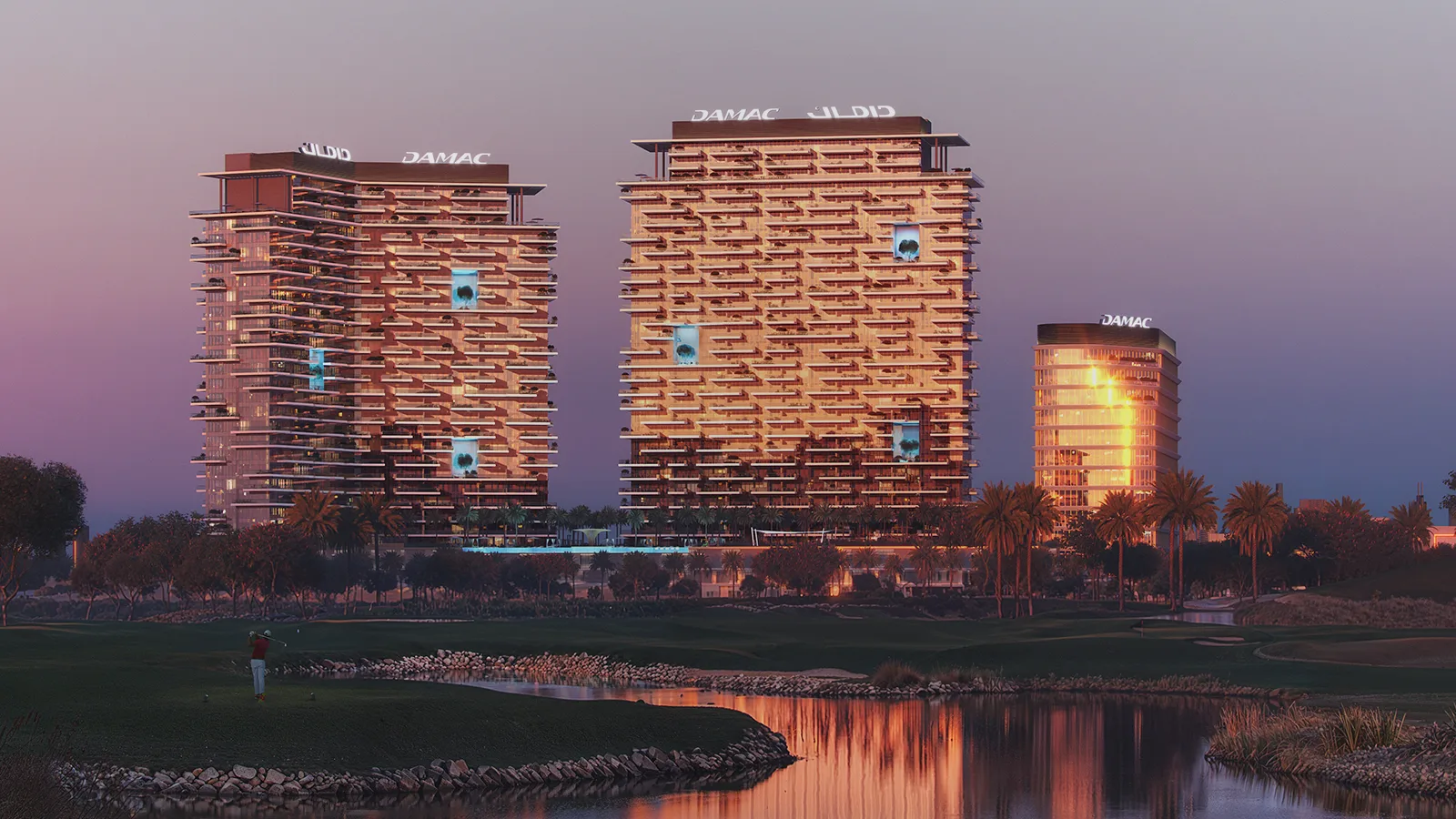
DAMAC Hills
DAMAC District
From AED 1,283,000 ≈ €317k
Q3 2029
1–2 BR · 20/40/40
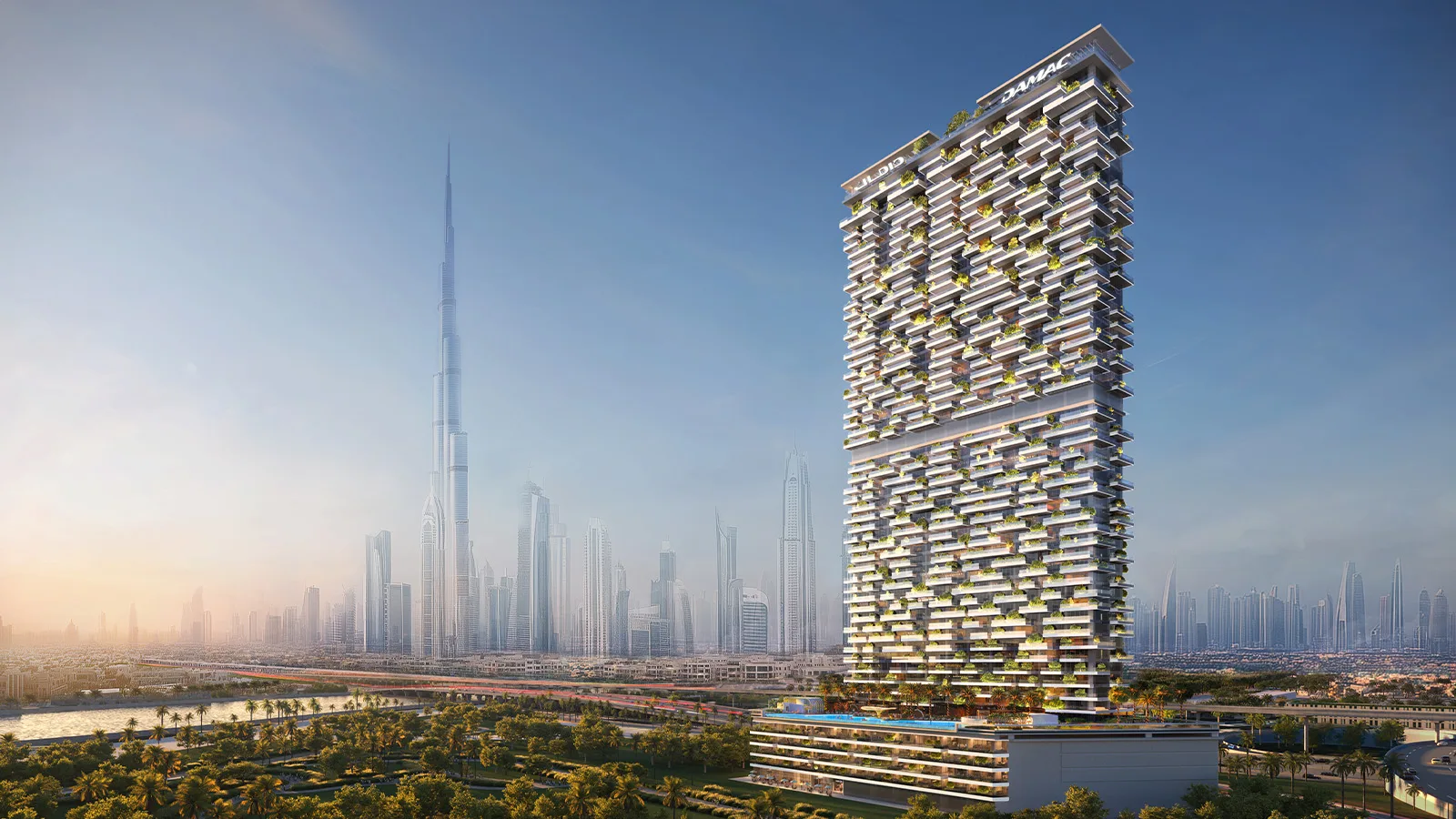
Al Wasl / Sheikh Zayed Road
Safa Gate
From AED 2,142,000 ≈ €529k
Q4 2029
1–2 BR, plus 3 and 5 BR · On request
Our guide to the best areas to invest in Dubai compares all eight areas we cover by budget and goal, and our guide to studio apartments for sale in Dubai looks at the smallest units, which often yield the most.
Long let or holiday home
Short-term letting can produce a higher gross return than a 12-month tenancy, but the gap narrows after costs, and the income moves more from month to month.
Income
- Long let
- Fixed rent, often paid by cheque in advance
- Holiday home
- Varies by season and by month
Who pays utilities
- Long let
- Tenant
- Holiday home
- Owner
Furnishing
- Long let
- Optional
- Holiday home
- Required, and refreshed regularly
Management
- Long let
- Letting fee plus optional management
- Holiday home
- Operator commission, usually much higher
Permit
- Long let
- Lease registered through Ejari
- Holiday home
- Holiday home permit from Dubai's Department of Economy and Tourism
If demand dips
- Long let
- Tenant stays until the lease ends
- Holiday home
- Bookings can change within days
| Long let | Holiday home | |
|---|---|---|
| Income | Fixed rent, often paid by cheque in advance | Varies by season and by month |
| Who pays utilities | Tenant | Owner |
| Furnishing | Optional | Required, and refreshed regularly |
| Management | Letting fee plus optional management | Operator commission, usually much higher |
| Permit | Lease registered through Ejari | Holiday home permit from Dubai's Department of Economy and Tourism |
| If demand dips | Tenant stays until the lease ends | Bookings can change within days |
AirDNA data reported by Skift showed UAE short-term rental booked nights in the third quarter of 2026 about 13% below a year earlier, a reminder that holiday-home income follows tourism, while a long let fixes the rent for the term. Our guide to Airbnb in Dubai and the holiday home rules covers permits, fees and realistic returns.
Off-plan: income starts at handover
If you buy off-plan, rent starts once the building is finished and let. On a three or four-year payment plan, you pay in stages and your income begins when you collect the keys, so check the handover date in the contract. When you compare an off-plan unit with a ready one, compare the return on the cash you will have paid in by each date, not just the eventual yield.
Plan your first lease, too: many owners in the same building look for tenants in the same month, which can soften first-year rents. Pricing slightly below the building average for the first lease often fills the flat faster.
Tax on Dubai rental income
The UAE does not tax individuals on rental income from property they own personally. Many overseas owners still report that income at home: UK residents generally have to report overseas rental income to HMRC, and most EU countries tax their residents on worldwide income too, often with a credit or exemption under a tax treaty. The rules vary, so take advice where you live. Our guide to tax on Dubai property for UK and EU residents explains the general position.
How to check a yield before you buy
- Get two or three real rental comparables for the same building or a near neighbour, ideally from Ejari-registered leases rather than adverts.
- Ask for the building's current service charge per square foot and how it has changed.
- Budget one month of vacancy a year, and more if the area has a lot of supply due.
- Add the 4% Dubai Land Department fee and other costs to the price before you divide.
- Run the result through the calculator above and compare it with what you could earn at home after tax.
If the net figure still looks good after all of that, you have a sound investment case. When you are ready, our guide to whether it is worth buying property in Dubai helps you weigh up the wider picture, and you can ask for a shortlist from one of our advisers, who reply by WhatsApp or email. Plan to Keys is a registered sales partner of DAMAC and Azizi Developments, and the developer pays our commission, not you.
Frequently asked questions
What is a good rental yield in Dubai?
+
REIDIN put the Dubai average at about 6.2% gross in September 2026, and about 6.6% for apartments. A gross yield at or above the apartment average, in a building with reasonable service charges, is a good result. In net terms, after costs, around 4% to 5% is realistic for a long let.
Which areas in Dubai have the highest rental yields?
+
Mid-market apartment communities away from the coast tend to produce the highest gross yields, because purchase prices are low relative to rents. Prime waterfront areas and large villas yield the least. Higher-yielding areas can also see more new supply, so check what is being handed over nearby.
Are rents falling in Dubai?
+
Rent growth has paused in 2026. REIDIN's rent index was about 7% lower year on year in September 2026, while ValuStrat's index was still slightly up on the year in the second quarter. Most analysts link the slowdown to affordability and the large number of new homes being delivered.
Is rental income from Dubai property taxed?
+
Not in the UAE, for individuals owning property personally. But if you live in the UK or an EU country, you will usually have to declare it and may owe tax at home. Ask a tax adviser where you are resident.
Is Airbnb more profitable than a long let in Dubai?
+
It can be in a strong tourist year, but costs are higher and income varies more. In 2026, short-term bookings in the third quarter were still below 2025 levels, according to AirDNA. For most overseas owners, a long let is the steadier choice.
General information as of 24 November 2026, not legal, tax or financial advice. Rules and prices change; ask us to confirm the current position before you commit.
Keep reading
All guidesInvestment · 9 min
Is it worth buying property in Dubai? A clear answer for overseas buyers
Is it worth buying property in Dubai in 2026? For patient buyers, often yes: yields, escrow protection, low UAE tax, real costs and what to check first.
Read the guideInvestment · 9 min
Airbnb in Dubai: holiday-home rules, permits and returns for owners
Airbnb in Dubai is legal with a holiday home permit from the Department of Economy and Tourism. The rules, fees, Tourism Dirham, management and 2026 returns.
Read the guideAreas · 10 min
The best areas to buy property in Dubai in 2026, by budget and goal
The best areas to invest in Dubai depend on your goal: yield, resilience or a family home. Eight areas compared by entry price, strengths and what to check in 2026.
Read the guideGet a shortlist
Two questions. One honest shortlist.
Tell us what you are after and one of our advisers sends three to five projects that fit, with real payment schedules in euros.