
Getting a mortgage in Dubai as a non-resident
Can you get a mortgage in Dubai as a non-resident? Yes, from some UAE banks. Loan-to-value limits, off-plan and buy-to-let rules, documents, costs and examples.
8 min read · Updated 13 October 2026 · Independent guide, checked against official sources
Yes, you can get a mortgage in Dubai as a non-resident foreigner, but from fewer banks and on tighter terms than UAE residents. The Central Bank of the UAE sets the ceilings: 60% of the value for an investment property bought by a foreigner, 80% for a first home under AED 5 million, and 50% for any off-plan property. Banks then apply their own, usually stricter, rules to people who live and earn abroad.
In practice, plan on borrowing about 50% to 60% of the value as a non-resident, over up to 25 years, with the deposit and all buying costs paid from your own money. Many European buyers of off-plan homes pay the construction instalments in cash and only borrow for the handover payment.
This guide sets out the rules as of October 2026, what banks actually ask for, and the numbers on real projects.
Central Bank mortgage limits in Dubai
All UAE banks follow the Central Bank's mortgage regulations, set out in Article 3 of its rulebook on mortgage loans, as amended in 2020. For expatriates, which includes non-residents, the maximum loan-to-value (LTV) ratios are:
| Purchase | Maximum loan | Minimum deposit |
|---|---|---|
| First home or owner-occupied, value under AED 5 million | 80% | 20% |
| First home or owner-occupied, value over AED 5 million | 70% | 30% |
| Second home or investment property, any value | 60% | 40% |
| Off-plan property, any buyer, any purpose | 50% | 50% |
The same rules also set:
- Maximum term: 25 years.
- Debt burden: total monthly debt repayments can be at most 50% of your income, and banks must stress test the loan at 2 to 4 percentage points above the current rate.
- Maximum loan: up to seven times annual income for expatriates.
- Rental voids: for investment property, the bank must deduct at least two months' rent when it assesses affordability.
- Interest-only: allowed only on investment loans, and for no more than five years from the first drawdown.
These are ceilings, not entitlements. LTV is measured against the lower of the price and the bank's valuation, so a low valuation means a bigger deposit.
What banks actually offer non-residents
Most European buyers are buying to let or as a second home, so the 60% investment ceiling is the realistic starting point. Bank policies for non-residents are often lower again. One large UAE bank's own non-resident page, for example, quotes financing of up to 50% of the property's fair market value, with minimum income starting at AED 15,000 a month (about €3,700) or a minimum average balance.
Expect these patterns:
- Not every bank lends to non-residents, and some only accept applicants from certain countries or with income in certain currencies.
- Minimum income and minimum loan sizes apply, and they vary between banks.
- Age limits are set by each bank. The Central Bank leaves the maximum age at final repayment to the lender, and many banks want the loan repaid around retirement age.
- Pricing is usually a fixed rate for an initial period of one to five years, then a variable rate linked to EIBOR, the UAE interbank rate. Because the dirham is pegged to the US dollar, rates broadly follow US dollar interest rates rather than the European Central Bank or the Bank of England.
A mortgage broker in Dubai can compare non-resident lenders in one application, which saves time. Ask whether the broker is paid by the bank or by you.
Off-plan mortgage in Dubai: what is possible
The Central Bank caps every off-plan mortgage at 50% of the value, whoever the buyer is. On top of that, banks only lend on projects they have approved, and relatively few lend to non-residents during construction.
That is why most off-plan buyers from Europe use the developer's payment plan during the build and take a mortgage at handover. A plan that leaves a large share for handover fits this well.
- DAMAC Islands, villas and townhouses from AED 2,750,000 (about €679,000), runs a 75/25 plan: 20% at booking, 55% during construction and 25% on handover, due from Q4 2028. At the "from" price the handover payment is AED 687,500 (about €170,000), a quarter of the value and well within a non-resident LTV.
- Lagoon Views in DAMAC Lagoons, from AED 1,625,000 (about €401,000), is on a 1% monthly plan with handover due in Q2 2027, so a buyer there would be looking at a completion mortgage soon. Ask for the exact balance due at handover on the current release.
Once the building is complete and the title deed is issued, the property counts as ready, and the 50% off-plan cap no longer applies. Our guide to off-plan payment plans shows how much each plan leaves for handover.
Buy-to-let mortgage in Dubai
There is no separate buy-to-let product in the UK sense. A property bought to let falls into the Central Bank's "investment property" category, capped at 60% LTV for expatriates regardless of value. The bank will assess you mainly on your own income, with expected rent counted cautiously after the two-month void deduction.
Before borrowing to let, check that the numbers work after service charges, management fees and interest. Our guide to Dubai rental yields shows how quickly a gross yield shrinks once costs are taken off.
Worked example: a ready apartment at AED 2,135,000
Take an apartment at the Safa Gate "from" price of AED 2,135,000 (about €527,000) after completion, financed at 50% over 25 years. The rates below are illustrations only, not offers.
| Assumed rate | Loan | Monthly payment | In euros |
|---|---|---|---|
| 4.5% | AED 1,067,500 | AED 5,934 | about €1,465 |
| 5.5% | AED 1,067,500 | AED 6,555 | about €1,620 |
| 6.5% | AED 1,067,500 | AED 7,208 | about €1,780 |
You would need the other AED 1,067,500 (about €264,000) in cash, plus buying costs: the 4% DLD fee of AED 85,400, DLD mortgage registration of 0.25% of the loan (about AED 2,700), the bank's arrangement and valuation fees, and insurance. The full list is in our guide to Dubai property buying costs.
Try your own price, deposit, rate and term here:
Calculator
Dubai mortgage calculator
Monthly repayments in dirhams and euros. Non-residents can usually borrow 50 to 60% of the value; most banks lend at handover, not during an off-plan build.
Monthly payment
AED 6,326
≈ €1,562 a month
Loan
AED 1,000,000
50% of the price
Total interest
AED 518,359
over 20 years
Illustration only, not an offer. Rates are usually a fixed period then linked to EIBOR; banks also charge arrangement, valuation and DLD mortgage registration fees (see the buying costs calculator).
Documents a European buyer needs
Each bank has its own list, but non-resident applicants are typically asked for:
- Passport, and proof of home address.
- Recent bank statements, often six months, showing salary or business income.
- Payslips and an employment letter if employed, or two to three years of accounts or tax returns if self-employed.
- A credit report from your home country.
- Details of existing loans and mortgages.
- The signed sale contract (SPA or Form F) once you have one.
Documents not in English may need certified translation. Start gathering them before you reserve a property, because a pre-approval gives you a firm budget.
How the process works
- Pre-approval. The bank checks your income and credit and confirms how much it may lend, usually valid for a limited period.
- Property and valuation. Once you have a signed contract, the bank values the property.
- Final offer. The bank issues the offer letter and loan agreement.
- Registration. The mortgage is registered with the Dubai Land Department alongside the transfer, and the bank pays the seller or developer.
Remote buyers can complete with a power of attorney. Our step-by-step buying guide explains how to set one up from the UK or Europe.
The risks of borrowing in dirhams
- Currency mismatch. You earn in euros or pounds and repay in a dollar-pegged currency. A weaker euro or pound raises your real monthly cost.
- Rate resets. After the fixed period ends, payments move with EIBOR.
- Valuation shortfall. If the bank values the property below the price, you fund the gap.
- Early repayment. The Central Bank caps early settlement fees at 1% of the outstanding balance or AED 10,000, whichever is lower, so refinancing is cheap by European standards. Fixed-rate deals may carry their own terms, so read them.
Some buyers prefer to release equity from a home in Europe instead, which avoids UAE bank criteria but moves the currency risk onto the Dubai side. Take independent advice on which suits you. To have a licensed partner broker check what you can borrow against a shortlist, use the enquiry form.
Launches mentioned in this guide
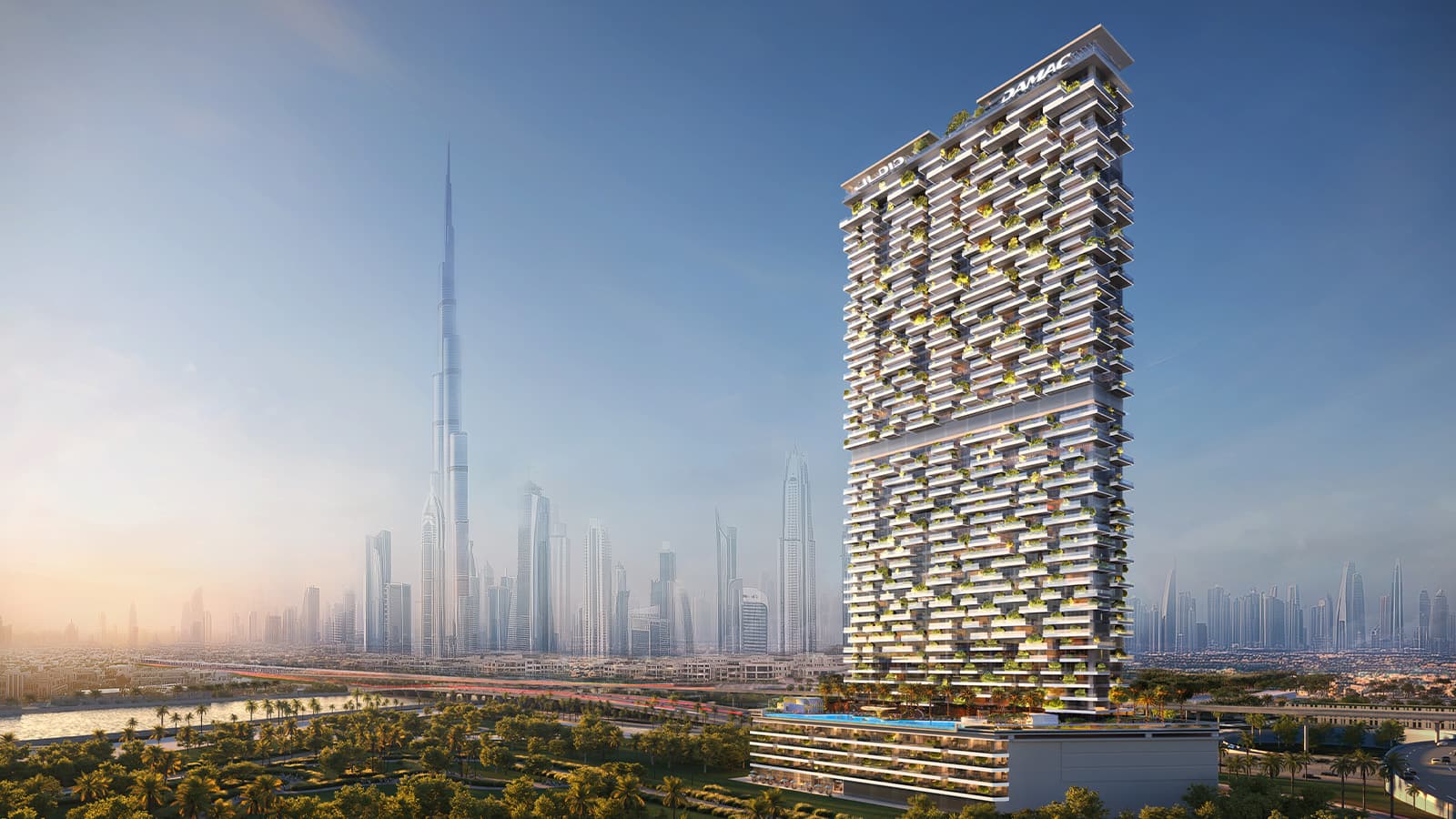
Al Wasl / Sheikh Zayed Road
Safa Gate
From AED 2,135,000 ≈ €527k
Q4 2029
1–2 BR · Payment plan available (ask for the current release)
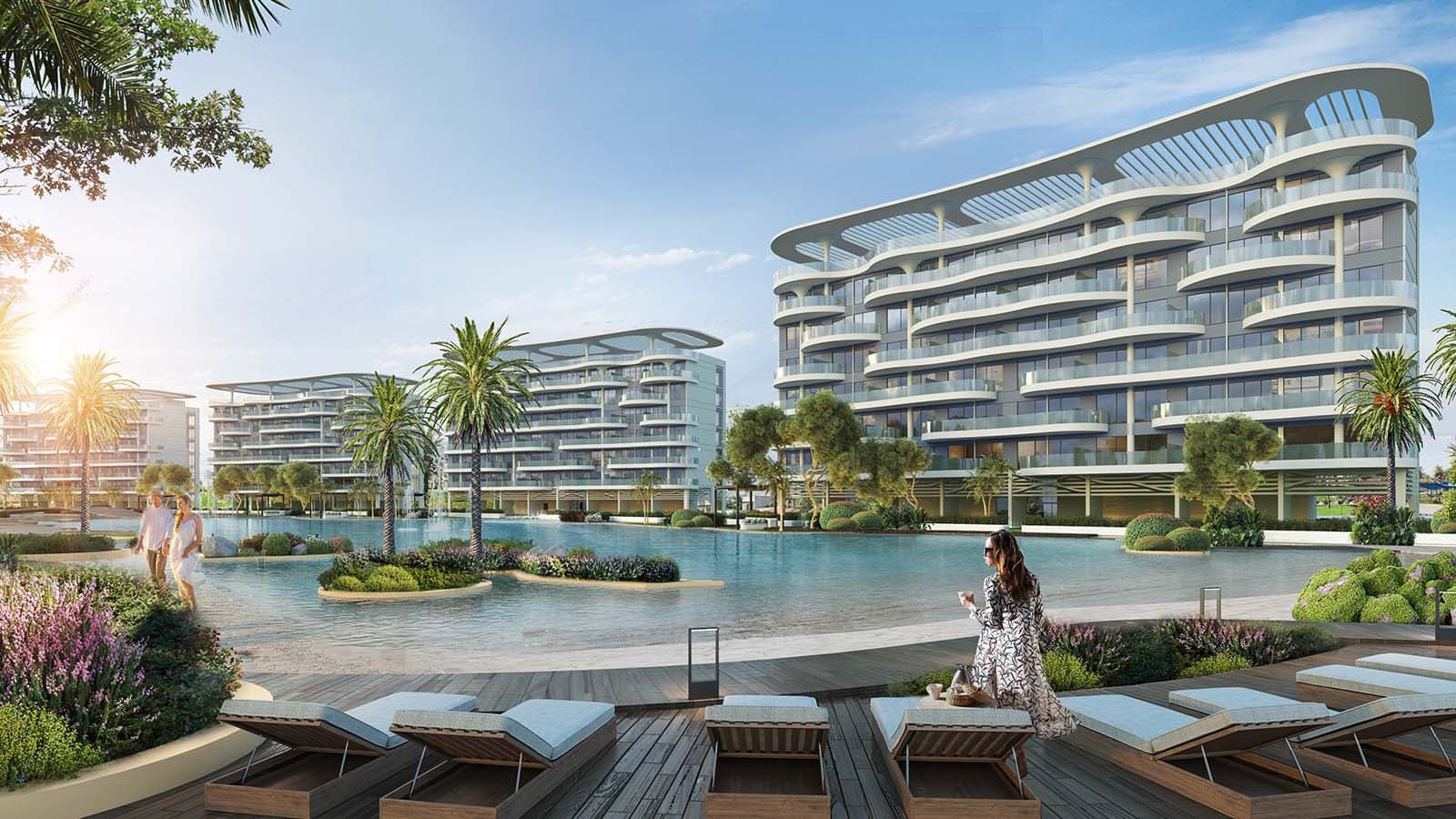
DAMAC Lagoons
Lagoon Views
From AED 1,625,000 ≈ €401k
Q2 2027
1–2 BR · 1% monthly plan

Dubailand
DAMAC Islands
From AED 2,750,000 ≈ €679k
Q4 2028
4–7 BR · 75/25
Frequently asked questions
Can I get a mortgage in Dubai as a foreigner?+
Yes. UAE banks lend to foreigners, including some that lend to non-residents living in Europe. Non-residents usually borrow about 50% to 60% of the value, within the Central Bank's limits, and must meet the bank's minimum income and age rules.
How much deposit do I need for a mortgage in Dubai?+
As a non-resident buying to let, expect a deposit of at least 40% under Central Bank rules and often 50% under bank policy. On off-plan property the deposit is at least 50%. Buying costs, including the 4% DLD fee, come on top in cash.
Can you get a mortgage on off-plan property in Dubai?+
Yes, but only up to 50% of the value and only on projects the bank has approved. Few banks lend to non-residents during construction, so most buyers pay the build instalments in cash and take a mortgage for the handover payment.
What are mortgage rates in Dubai for non-residents?+
Rates are set by each bank and change with US dollar interest rates, because the dirham is pegged to the dollar. Deals are usually fixed for one to five years, then variable over EIBOR. Non-residents generally pay more than residents, so compare offers at the time you apply.
How long can a Dubai mortgage last?+
The Central Bank allows up to 25 years. Banks also set a maximum age at the final repayment, so older borrowers may be offered a shorter term.
General information as of 13 October 2026, not legal, tax or financial advice. Rules and prices change; a licensed broker confirms the current position before you commit.
Keep reading
All guidesBuying guide · 9 min
Dubai property buying costs: the DLD fee and every charge on top
Dubai Land Department fees explained: the 4% DLD fee, Oqood, trustee and title deed fees, commission, mortgage costs and service charges, with examples.
Read the guideBuying guide · 8 min
Off-plan payment plans in Dubai: 60/40, 1% a month and post-handover
How a Dubai payment plan works: 60/40, 75/25, 1% a month and post-handover plans explained, with real instalment figures, handover funding and the risks.
Read the guideBuying guide · 9 min
Buying off-plan in Dubai: escrow, Oqood and how your money is protected
Buying off-plan in Dubai explained: how escrow and Oqood registration protect your money, the steps to buy, the 4% DLD fee and the risks the law leaves to you.
Read the guideGet a shortlist
Five questions. One honest shortlist.
Tell us what you are after and a licensed partner sends three to five projects that fit, with real payment schedules in euros.
Step 1 of 5